

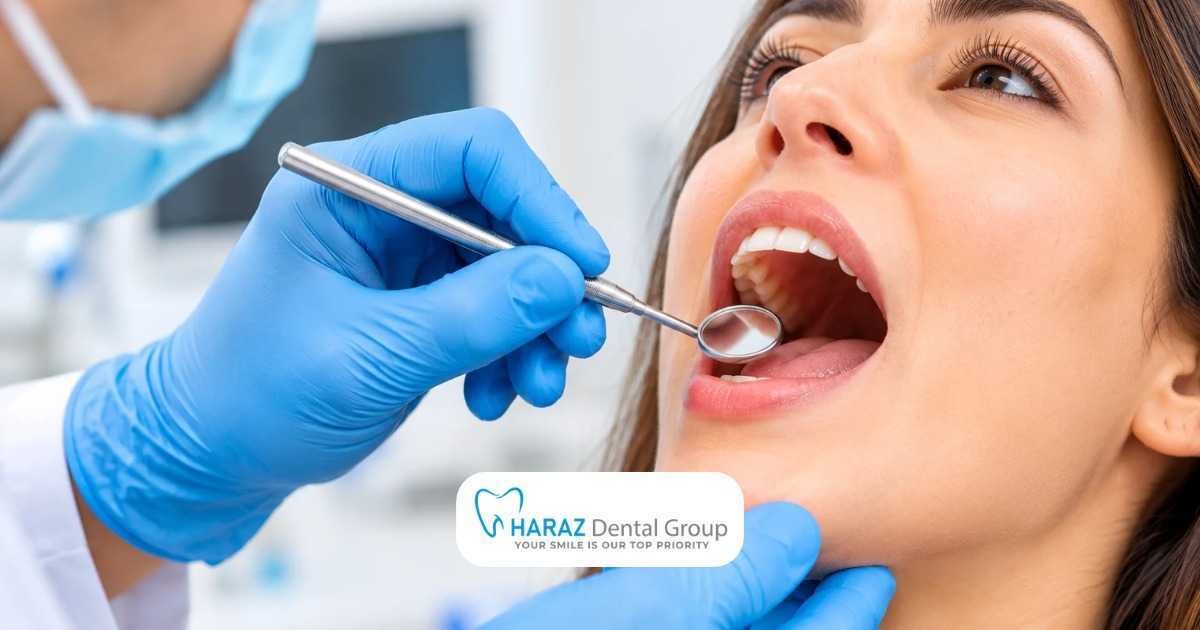
Most people think of a dental visit as a check for cavities and gum disease. But your dentist is also looking at something far more serious: the health of your lips, tongue, cheeks, gums, and throat. Knowing how often you should get an oral cancer screening helps you catch changes early, when they are easiest to treat.
- How Often Should You Have Your Mouth Checked for Oral Cancer?
- Should Oral Cancer Screening Be Part of Your Routine Dental Checkup?
- Who May Need More Frequent Oral Cancer Evaluations?
- What Happens During an Oral Cancer Screening?
- Signs You Should Never Wait for Your Next Dental Appointment
- Can a Dentist Detect Oral Cancer in Its Early Stages?
- Schedule an Oral Cancer Examination in Fresno, CA
- Frequently Asked Questions
How Often Should You Have Your Mouth Checked for Oral Cancer?
For most adults, an oral cancer screening once or twice a year is appropriate, and it is usually done at your regular dental checkup. If you see your dentist every six months, you already have a built-in screening schedule.
The goal of oral cancer screening frequency is simple: spot suspicious tissue changes before they cause symptoms. Early-stage oral cancer is often painless, so waiting until something hurts can mean waiting too long.
Your dentist may recommend a different interval based on your age, lifestyle, and medical history. A healthy 25-year-old with no risk factors and a long-time smoker have very different needs.
Should Oral Cancer Screening Be Part of Your Routine Dental Checkup?
Yes. An oral cancer screening during a dental checkup is one of the most practical ways to monitor your health. It takes only a few minutes, requires no special preparation, and fits naturally into the exam.
Dentists see the inside of your mouth regularly. That gives them a baseline of what is normal for you, so they can recognize subtle changes such as a new patch, a thickened area, or an asymmetry that you might never notice yourself.
If you only visit the dentist when something feels wrong, you may miss that window of early detection. Regular visits are not just about clean teeth. They are about long-term protection.
Who May Need More Frequent Oral Cancer Evaluations?
If you are wondering how often dentists should check for oral cancer in higher-risk patients, the answer is often more than twice a year. Your dentist will decide based on your individual situation. These groups commonly benefit from closer monitoring.
Tobacco Users
Cigarettes, cigars, pipes, chewing tobacco, and snuff all increase risk. Tobacco exposes oral tissue to harmful chemicals every day. If you use any form of tobacco, ask your dentist whether a more frequent schedule makes sense.
People Who Consume Alcohol Heavily
Heavy alcohol use raises oral cancer risk on its own, and the risk climbs further when alcohol and tobacco are combined. Regular evaluations help monitor tissue that may be under constant irritation.
People With a History of Oral Lesions
White patches (leukoplakia), red patches (erythroplakia), or other persistent lesions can sometimes become precancerous. If a dentist has already flagged an area, expect to have it rechecked at set intervals.
People With Previous Oral Cancer
Anyone who has been treated for oral cancer faces a higher chance of recurrence or a new cancer in the mouth or throat. Follow-up examinations are typically scheduled closely and coordinated with your medical team.
Other factors, including HPV infection, prolonged sun exposure to the lips, a weakened immune system, and a family history of cancer, may also influence your screening plan.
What Happens During an Oral Cancer Screening?
An oral cancer screening is quick, comfortable, and non-invasive. Here is what you can usually expect:
Medical and lifestyle review. Your dentist asks about tobacco use, alcohol, symptoms, and any changes since your last visit.
Visual examination. The dentist inspects your lips, gums, tongue, inner cheeks, floor and roof of the mouth, and throat for unusual color, texture, or swelling.
Physical palpation. Using gloved hands, the dentist gently feels the tissues of your mouth, jaw, and neck to check for lumps or hard areas.
Discussion of findings. If everything looks normal, you carry on with your regular visit. If something looks concerning, your dentist may recommend monitoring, further testing, or a referral for a biopsy.
A screening is not a diagnosis. It is a first step that identifies when closer evaluation is needed.
Signs You Should Never Wait for Your Next Dental Appointment
Do not hold off on a scheduled checkup if you notice any of the following, especially if it lasts longer than two weeks:
A mouth sore or ulcer that does not heal
White or red patches on the gums, tongue, or cheeks
A lump, thickening, or rough spot in the mouth or neck
Unexplained bleeding in the mouth
Persistent pain, numbness, or tingling in the mouth or lips
Difficulty chewing, swallowing, or moving the tongue or jaw
A lasting sore throat or hoarseness
A change in how your dentures or teeth fit together
Many of these signs have harmless causes, but only a professional dental scans can tell the difference. When in doubt, get it checked.
Can a Dentist Detect Oral Cancer in Its Early Stages?
Dentists are often the first healthcare professionals to notice early warning signs. A trained eye can identify tissue changes that look minor to a patient, and early detection of oral cancer significantly improves treatment options and outcomes.
It is important to be realistic, though. A dentist can identify suspicious areas, but only a biopsy and laboratory analysis can confirm cancer. If your dentist finds something unusual, they will explain the next steps and refer you to the right specialist.
Schedule an Oral Cancer Examination in Fresno, CA
Regular screening is one of the simplest ways to protect your long-term health. If you are due for a checkup, have not been screened in a while, or have noticed a change in your mouth, Haraz Dental Group is here to help. Contact our Fresno, CA team today to book your dental exam and oral cancer screening, and get clear answers about the right schedule for you.
This article is for educational purposes and does not replace professional medical or dental advice.
Frequently Asked Questions
Is an oral cancer screening necessary every six months?
For many people, it is convenient and sensible because it matches the standard dental checkup interval. Low-risk patients may be screened at least annually, while higher-risk patients may need more frequent visits. Your dentist will recommend the right schedule.
Does an oral cancer screening hurt?
No. The exam involves looking and gently feeling the tissues of your mouth and neck. Most patients feel nothing more than light pressure.
Can young adults develop oral cancer?
Yes. Oral cancer is more common in older adults, but it can occur in younger people, particularly when HPV is involved. Age alone should not decide whether you get screened.
Should I get screened if I have no symptoms?
Yes. Early oral cancer often causes no pain or obvious symptoms. Screening is designed for people who feel perfectly healthy.