

- What Are Dental Sealants?
- Why Molars Are Most at Risk for Cavities
- Dental Sealant Procedure (Step-by-Step)
- When Should Kids Get Dental Sealants? (Best Timing)
- Dental Sealants vs Fillings (Key Difference)
- Are Dental Sealants Safe for Kids?
- How Long Do Dental Sealants Last?
- Do Dental Sealants Hurt?
- What Happens If You Don’t Get Sealants?
- Key Takeaways
- Frequently Asked Questions
According to the American Academy of Pediatric Dentistry (AAPD), childhood dental caries is one of the most prevalent chronic illnesses throughout the world; however, it can be treated with the appropriate preventive measures when the child is young.
Dental sealants for kids are an excellent form of prevention in the field of pediatric dentistry.
The goal of our practice, Haraz Dental Group, is to keep children from having dental issues before they begin. Children who receive dental sealants full early on will be less likely to have cavities in their molars during their cavity-prone years than children without dental sealants.
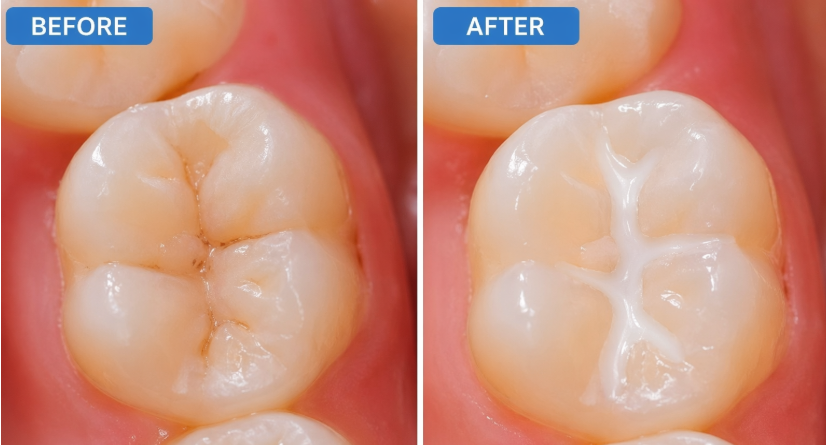
What Are Dental Sealants?
Dental sealants are a thin coating placed on the chewing surface of the back teeth (molars) so that the grooves where food and bacteria accumulate are sealed, preventing tooth decay.
Why Molars Are Most at Risk for Cavities
The many deep grooves and pits on dental molars will:
Trap food particles easily
Are difficult for children to clean properly
Harbor cavity-causing bacteria
Even with regular brushing, these areas are often missed, especially in younger children still developing proper brushing habits. That's how sealant plays an important role in helping keep your child's teeth healthy.
Why Kids Need Dental Sealants
Children are at increased risk for tooth decay because they have:
Poorly developed brushing techniques
Frequent consumption of sugary snacks and drinks
Newly erupted molars that are difficult to clean
Developing oral hygiene habits
Clinical insight from HarazDentalGroup:
Sealants must be applied within the first few months of eruption of a first molar to prevent early decay from forming in that tooth due to normal wear and tear.
How Effective Are Dental Sealants?
Molars may have a reduced chance of becoming cavities when dental sealants are used - as much as 80%. The number of times a child needs future dental treatment is greatly decreased when kids have dental sealants as compared to not having sealants at all.
The likelihood that a cavity will develop is increased by up to 3 times in children with no dental sealants.
How Dental Sealants Work
Dental sealants protect teeth by providing a smooth barrier to the teeth.
They work by:
Sealing deep grooves where bacteria accumulate
Preventing food particles from sticking
Blocking acid attacks on enamel
Making teeth easier to clean
These are like a shield to protect the most vulnerable teeth of children.
Dental Sealant Procedure (Step-by-Step)
This process is fast, easy, and safe for kids.
1. Cleaning the Tooth
The dentist will clean and dry the tooth's surface completely.
2. Preparing the Surface
The dentist will apply a special solution that helps hold the sealant to the tooth surface.
3. Applying the Sealant
A liquid resin is carefully painted onto the tooth.
4. Hardening the Sealant
A special curing light hardens the material within seconds.
There is no need for drilling or injections so there is no pain involved while getting a sealant.
Most children are able to return to their normal day to day activities immediately after finishing the procedure.
When Should Kids Get Dental Sealants? (Best Timing)
First molars: Around age 6
Second molars: Around age 12.
Applying sealants early will provide children with protection from decay during the years when they are most likely to get cavities. Also, some teenagers and adults who have difficulty avoiding cavities may benefit from having sealants placed on their teeth later on.
Dental Sealants vs Fillings (Key Difference)
Dental Sealants | |
Prevent cavities | Treat existing cavities |
Non-invasive | Requires drilling |
Painless | May involve discomfort |
Lower cost | Higher cost |
Simple rule: Prevention is always easier, safer, and more affordable than treatment.
Are Dental Sealants Safe for Kids?
Yes, dental sealants are safe, non-invasive, and widely recommended by dental professionals for children.
Modern sealants are:
BPA-safe in trace or negligible amounts
Designed for long-term protection
Approved by major dental organizations
How Long Do Dental Sealants Last?
Dental sealants typically last 3 to 10 years, depending on:
Oral hygiene habits
Diet and chewing patterns
Regular dental checkups
At Haraz Dental Group, we monitor sealants during routine visits and reapply them if necessary.
Do Dental Sealants Hurt?
No, dental sealants are completely painless.There is no drilling, no anesthesia, and no discomfort during the procedure.
What Happens If You Don’t Get Sealants?
Without sealants:
Molars remain exposed to bacteria
Cavities can develop quickly
Treatment may require fillings or more complex procedures
In our experience, the majority of preventable cavities are due to a delay in receiving sealants or omission of receiving them.
Sealants vs Fluoride: Do Kids Need Both?
Yes, sealants and fluoride Treatment serve different purposes:
Sealants: It provide protection for the chewing surface of molar teeth
Fluoride: It strengthens the enamel on all teeth.
So, when combined, sealants and fluoride provide optimal protection against tooth decay.
Why Parents Choose Haraz Dental Group for Sealants
At Haraz Dental Group, we specialize in gentle, preventive dental care for children.
We provide:
Child-friendly, stress-free treatment
High-quality, safe sealant materials
Personalized preventive care plans
Experienced pediatric-focused dental team
Our goal is simple: help your child grow up cavity-free with a healthy, confident smile.
Book your Appointment now!
Key Takeaways
Dental sealants are protective coatings applied to molars
They reduce cavity risk by up to 80%
Best applied around ages 6 and 12
The procedure is quick, painless, and non-invasive
Sealants are more cost-effective than fillings
They provide long-term protection during high-risk years
Frequently Asked Questions
What are dental sealants for kids?
Dental sealants are thin coatings applied to back teeth to prevent cavities by blocking food and bacteria from settling in grooves.
At what age should children get sealants?
Children should get sealants around age 6 for first molars and age 12 for second molars.
How long do dental sealants last?
Dental sealants typically last between 3 and 10 years with proper care.
Are dental sealants safe for children?
Yes, they are safe, non-invasive, and recommended by dental professionals worldwide.
Do sealants replace brushing and flossing?
No. Sealants protect molars, but daily brushing and flossing are still essential.
Do dental sealants hurt?
No, the procedure is completely painless and requires no drilling or anesthesia.