

- What Causes Gum Disease?
- Gingivitis vs. Periodontitis: Know Your Stage
- Non-Surgical Gum Disease Treatment Options
- Surgical Gum Disease Treatment Options
- Non-Surgical vs. Surgical: Which Fits Your Case?
- How Dentists Decide the Best Treatment for You
- Protecting Your Gums for the Long Run
- Ready to Protect Your Gums?
- Frequently Asked Questions
Puffy gums. A little blood in the sink. Breath that doesn't feel fresh no matter how often you brush. These signals are easy to dismiss, but they're usually your mouth's first attempt to flag something bigger. Gum disease is one of the most common, and most treatable, conditions in dentistry, yet many patients wait too long to ask the question that matters most: what's the best gum disease treatment for my situation?
There isn't one answer for everyone. The best choice to consider will depend on how much the disease has advanced and what level of oral hygiene you practice on a day-to-day basis. Here is a complete guide on the various treatments available, starting from a regular cleaning at the dental clinic and finishing with periodontal surgery, ensuring that you are informed rather than being nervous before your next appointment.
What Causes Gum Disease?
Gum disease, or periodontal disease, starts with plaque a sticky film of bacteria that constantly forms along the gumline. Left alone, plaque hardens into tartar which irritates gum tissue and triggers inflammation that can spread below the gumline, breaking down the ligaments and bone that hold your teeth in place.
Smoking or vaping, uncontrolled diabetes, hormonal changes, certain medications, genetics, and skipping dental checkups all raise your risk. Effective treatment doesn't just clean the teeth, it interrupts the cycle driving the infection.
Gingivitis vs. Periodontitis: Know Your Stage
Nearly every gum disease treatment plan starts by identifying the stage.
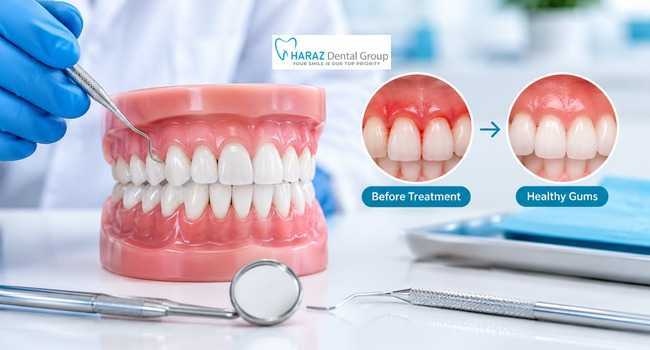
Gingivitis is the early, reversible stage. Gums may look red or swollen and bleed slightly during brushing, but no permanent damage has occurred to the bone yet. With proper care, gingivitis is fully reversible.
Periodontitis develops when gingivitis goes untreated. Infection moves below the gumline, gums pull away from the teeth, and pockets form where bacteria hide. As it advances, it can cause gum recession, bone loss, and loose teeth. Knowing your stage is the difference between a simple cleaning and a more involved plan, which is why an accurate evaluation always comes first.
Non-Surgical Gum Disease Treatment Options
For gingivitis and many early-to-moderate periodontitis cases, non-surgical care is the first and most effective line of defense.
Professional Dental Cleaning: Removes plaque and tartar above the gumline, often enough to reverse gingivitis on its own.
Scaling and Root Planing (Deep Cleaning): The best non-surgical method of treating periodontitis. This method involves scaling, a practice whereby bacteria and tartar are cleaned away below the gumline, followed by root planing, in which the tooth root is smoothed out so that the gums are able to reattach and minimize the size of the pockets.
Antibiotic and Antimicrobial Therapy: Localized gels, slow-release chips, or antimicrobial rinses, often paired with deep cleaning to control stubborn bacteria in deeper pockets.
Laser Gum Therapy: A minimally invasive option using targeted laser energy to remove infected tissue and bacteria without cutting or stitches , often with faster recovery.
Periodontal Maintenance: Ongoing cleanings, usually every three to four months, to monitor pocket depth and prevent recurrence.
Surgical Gum Disease Treatment Options
When periodontitis is advanced, deep pockets, notable bone loss, or tissue that hasn't responded to non-surgical care, surgery offers a more predictable path to saving the tooth.
Flap Surgery (Pocket Reduction): Gum tissue is gently lifted so tartar and bacteria can be removed from deep pockets and irregular bone reshaped if needed. Gums are repositioned to fit more snugly, making the area easier to keep clean.
Bone Grafting: Rebuilds bone destroyed by advanced periodontitis, often as prep for a future dental implant.
Soft Tissue (Gum) Grafting: Covers exposed tooth roots from recession, easing sensitivity and restoring a healthier gumline.
Guided Tissue Regeneration: A biocompatible membrane placed between bone and gum tissue to encourage regrowth of lost structures, often paired with flap surgery.
Non-Surgical vs. Surgical: Which Fits Your Case?
Treatment | Best For | Addresses |
Professional Cleaning | Gingivitis, prevention | Plaque above the gumline |
Scaling & Root Planing | Early-to-moderate periodontitis | Bacteria below the gumline |
Antibiotic Therapy | Persistent infection | Bacteria in deep pockets |
Laser Gum Therapy | Mild-to-moderate periodontitis | Infected tissue |
Periodontal Maintenance | Ongoing care | Preventing recurrence |
Flap/Pocket Reduction Surgery | Deep pockets | Access for deep cleaning |
Bone Grafting | Bone loss | Rebuilding lost structure |
Gum Grafting | Recession, exposed roots | Restoring gum coverage |
Guided Tissue Regeneration | Specific bone defects | Regenerating bone/tissue |
How Dentists Decide the Best Treatment for You
There's no shortcut around a proper exam. Your dental team will measure pocket depth around each tooth, review X-rays for bone loss, and assess bleeding and inflammation. Mild cases often respond to a cleaning and better home care; moderate cases usually call for scaling and root planing; advanced cases may need surgery. Smoking, diabetes, and certain medications all influence healing speed, so your provider factors these into your plan.
Protecting Your Gums for the Long Run
Treatment gets your gums healthy again — daily habits keep them that way. Brush twice a day with a soft-bristled brush, floss daily, use an antimicrobial rinse if recommended, and keep up with routine visits so problems get caught early. If you've noticed bleeding gums but aren't sure what stage you're in, our guide on bleeding gums and what they mean is a useful next read.
Ready to Protect Your Gums?
Gum disease rarely improves on its own, but it's highly manageable with the right plan and an experienced team behind you. At Haraz Dental Group, our Fresno, Madera, and Tulare offices provide personalized gum disease treatment, from routine periodontal cleanings to advanced laser and surgical therapy built around your specific stage of gum health. Schedule your gum evaluation with Haraz Dental Group today and take the first step toward healthier, stronger gums.
Frequently Asked Questions
What is the best treatment for gum disease?
It depends on the stage. Gingivitis often responds to a professional cleaning and better home care, while periodontitis usually needs scaling and root planing, and advanced cases may require surgery such as flap surgery or bone grafting.
Can gum disease be reversed without surgery?
Gingivitis can typically be fully reversed with a cleaning and consistent hygiene. Early-to-moderate periodontitis is often managed non-surgically, though surgery may be needed if pockets stay deep or bone loss continues.
How long does gum disease treatment take to work?
Mild gingivitis can improve within one to two weeks. Scaling and root planing shows noticeable healing within weeks, while surgical recovery can take several months.
Is gum disease treatment painful?
Non-surgical treatment is done under local anesthesia with little discomfort. Surgical procedures may cause mild soreness for a few days, typically managed with over-the-counter pain relief.