

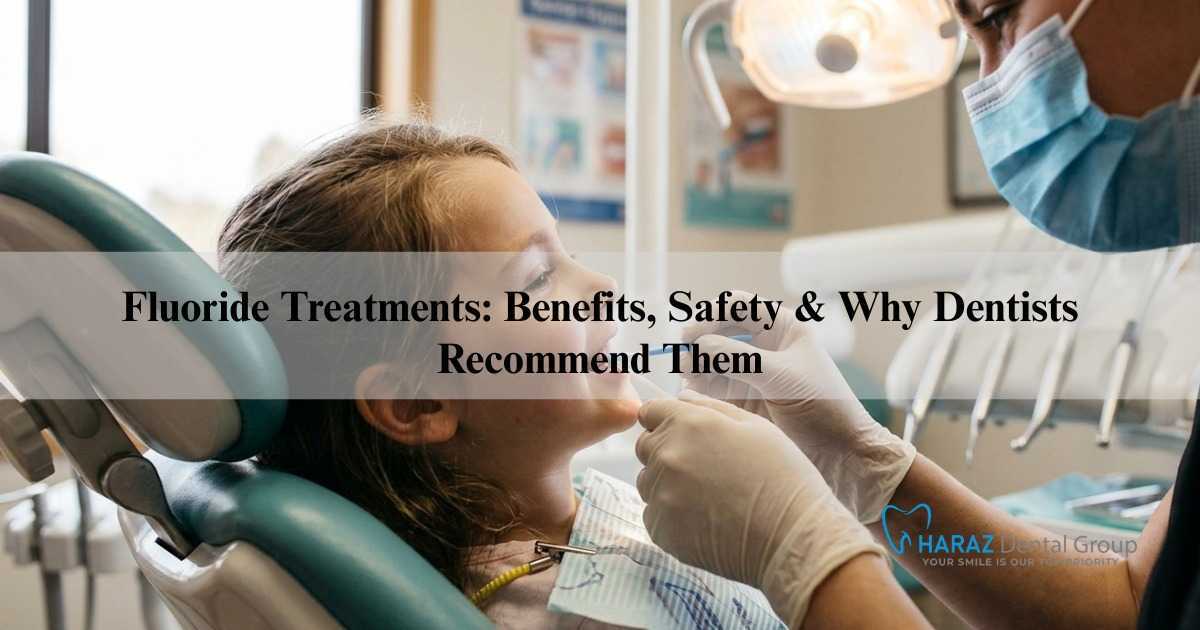
If your dentist has ever recommended a fluoride treatment at the end of your cleaning, you may have wondered, is this actually necessary? You're not alone. A lot of patients ask that same question. At Haraz Dental Group, one of Fresno's most trusted dental practices, fluoride treatments are a routine part of preventive care, and for very good reason.
- Introduction
- What Is a Fluoride Treatment?
- How Does Fluoride Actually Protect Your Teeth?
- The Key Benefits of Fluoride Treatments
- Who Should Get Fluoride Treatments?
- Is Fluoride Safe? Let's Address the Concerns
- What to Expect During a Professional Fluoride Treatment
- Why Dentists Recommend Fluoride — Even for Adults
- Frequently Asked Questions (FAQs)
Introduction
If your dentist has ever recommended a fluoride treatment at the end of your cleaning, you may have wondered, is this actually necessary? You're not alone. A lot of patients ask that same question. AtHaraz Dental Group, one of Fresno's most trusted dental practices, fluoride treatments are a routine part of preventive care, and for very good reason.
Whether you're a parent thinking about your child's teeth or an adult looking to stay ahead of cavities, professional fluoride treatment is one of the simplest and most cost-effective tools in dentistry. Let's break down what it is, what it does, and why dentists keep recommending it.
What Is a Fluoride Treatment?
Fluoride naturally exists in ground, water, and a lot of foods. When fluoride is put on tooth surfaces (by way of professional specialty services, as such, with others), it increases the strength of tooth enamel and makes teeth more resistant to acid from bacteria.
A professional fluoride service can provide you with even more benefit than what your fluoride toothpaste can accomplish.Applied in-office as a varnish, gel, or foam, it delivers a much higher concentration of fluoride directly to the enamel surface, in just a few minutes.
How Does Fluoride Actually Protect Your Teeth?
There is a process by which teeth will consistently lose and gain their mineral content. When you consume any food or drink that has sugar or acid in it, the bacteria in your mouth produce an acid that pulls minerals out of your tooth enamel (demineralization). Your saliva and the fluoride that is present can then replace the minerals back into your tooth (remineralization).
Here's why that matters:
Fluoride integrates into the enamel structure and makes it harder than it was before
It inhibits the bacteria that cause decay
In early cavities, fluoride can actually reverse the damage before a filling is needed
Think of it as a shield that gets stronger every time fluoride is applied.
The Key Benefits of Fluoride Treatments
1. Significantly Reduces Cavity Risk
Studies consistently show that professional fluoride treatments reduce cavities by up to 43% in children and meaningfully in adults too. For patients who are cavity-prone, this is a game-changer.
2. Strengthens Weakened Enamel
If you drink a lot of coffee, citrus juices, or carbonated drinks, your enamel takes a daily beating. Fluoride helps rebuild what's lost and keeps enamel dense and protective.
3. Protects Exposed Root Surfaces
Gums can recede with aging, exposing root surfaces that lack protection due to the absence of an enamel layer. The surface will be susceptible to decay and can be protected with fluoride.
4. Supports Kids During Critical Development Years
Since children’s permanent teeth have not yet completed their growth, then fluoride plays a role in building healthy strong permanent teeth. The American Academy of Pediatric Dentistry advocates that fluoride varnish should be applied immediately following the appearance of the first tooth.
5. Fights Sensitivity
Fluoride can reduce tooth sensitivity by blocking tiny tubules in exposed dentin, the layer beneath enamel. Many patients report noticeably less sensitivity after regular treatments.
6. Saves Money in the Long Run
A fluoride treatment at your checkup costs very little, and is often covered by insurance. Compare that to the cost of a filling, crown, or root canal. Prevention almost always wins financially.
Who Should Get Fluoride Treatments?
Fluoride isn't just for kids — though it's particularly important for them. Your dentist may especially recommend it if you:
Have a history of frequent cavities
Wear braces or have dental appliances
Have dry mouth (which increases decay risk)
Drink well water or bottled water without fluoride
Have gum recession or exposed root surfaces
Consume a high-sugar or high-acid diet
Have recently had radiation therapy to the head or neck
AtHaraz Dental Group, fluoride is offered as part of their pediatric dental care program as well as for adults who benefit from added protection.
Is Fluoride Safe? Let's Address the Concerns
This is probably the most common question patients ask, and it's a fair one. Here's the honest answer.
Yes, fluoride is safe when used appropriately.
The amounts used in professional dental treatments are well within safety guidelines established by the American Dental Association (ADA), the World Health Organization (WHO), and the Centers for Disease Control (CDC). Decades of research back this up.
The one concern worth knowing about is dental fluorosis, which can occur if children consume excessive fluoride while their teeth are still forming. This usually appears as faint white spots on teeth and is considered a cosmetic issue rather than a health one. It's also entirely avoidable by following standard dosing guidelines. In-office fluoride varnish is applied in tiny, precise amounts, about 0.3 to 0.5 mL, which is why it's considered safe even for very young children.
Bottom line: The risk of too little fluoride (cavities, tooth loss, expensive treatment) far outweighs the minimal risk of fluoride at recommended levels.
What to Expect During a Professional Fluoride Treatment
The process is quick and painless, most patients are surprised at how simple it is.
Your teeth are cleaned and dried
Fluoride varnish (or gel/foam) is applied with a small brush or tray
You wait a few minutes for it to set
You're asked to avoid eating or drinking for about 30 minutes
That's it. The fluoride continues working on your enamel for hours after application. Most dentists recommend a treatment every 6 to 12 months, though high-risk patients may benefit from more frequent applications.
Why Dentists Recommend Fluoride — Even for Adults
There's sometimes a misconception that once your adult teeth are fully in, fluoride is less important. That's not accurate.
Adult teeth are constantly exposed to the same acid challenges as a child's, every meal, every coffee, every sugary drink. Without regular remineralization support, enamel slowly weakens over time. Add in dry mouth (common with many medications), gum recession, and an aging immune system that's less efficient at fighting oral bacteria, and adults are just as vulnerable to decay as they think they're not.
Dentists recommend fluoride because it works, and it's one of the few treatments where a few minutes of prevention can save months of dental work.
Conclusion:
Fluoride treatments are one of the most evidence-backed, widely recommended preventive tools in modern dentistry. They're fast, affordable, safe, and genuinely effective at reducing cavities and protecting enamel — for patients of all ages.
If you're due for a checkup or want to learn more about whether a fluoride treatment is right for you or your child, the team at Haraz Dental Group in Fresno, CA is ready to help. Their approach to dental care is built around education, prevention, and making every patient feel at ease — because your smile deserves that kind of attention.
Ready to book your next visit? ContactHaraz Dental Group today and ask about adding a fluoride treatment to your next cleaning.
Frequently Asked Questions (FAQs)
How often should I get a fluoride treatment?
Most adults and children benefit from a professional fluoride treatment every six months during their regular cleaning visit. Patients with higher cavity risk may need it every three months.
Is fluoride treatment covered by dental insurance?
For children, fluoride treatments are typically covered by dental insurance. For adults, coverage varies by plan. Your dental office can check your benefits before your appointment.
Can I get fluoride treatment if I'm pregnant?
Yes, in most cases. Maintaining good oral health during pregnancy is important, and fluoride treatments at standard professional doses are generally considered safe. Always let your dentist know you're pregnant so they can tailor your care.
Does fluoride treatment hurt?
Not at all. The varnish or gel is simply brushed onto your teeth and takes only a couple of minutes. There's no discomfort involved.
What's the difference between fluoride in toothpaste and professional fluoride?
Toothpaste contains between 1,000 and 1,500 ppm (parts per million) of fluoride. Professional fluoride varnish used in dental offices contains around 22,600 ppm, dramatically more concentrated. It's a level only safe and effective when applied by a trained professional in small, controlled amounts.
Is fluoride treatment necessary if I already drink fluoridated water?
It can still help. Community water fluoridation provides low-level, continuous exposure which is beneficial. But for patients who are cavity-prone or at higher risk, professional applications offer a targeted boost that water alone doesn't provide.
At what age should kids start getting fluoride treatments?
The American Academy of Pediatric Dentistry recommends fluoride varnish as soon as the first tooth appears, usually around 6 months to 1 year of age. This early protection helps set the foundation for healthy teeth through childhood.