

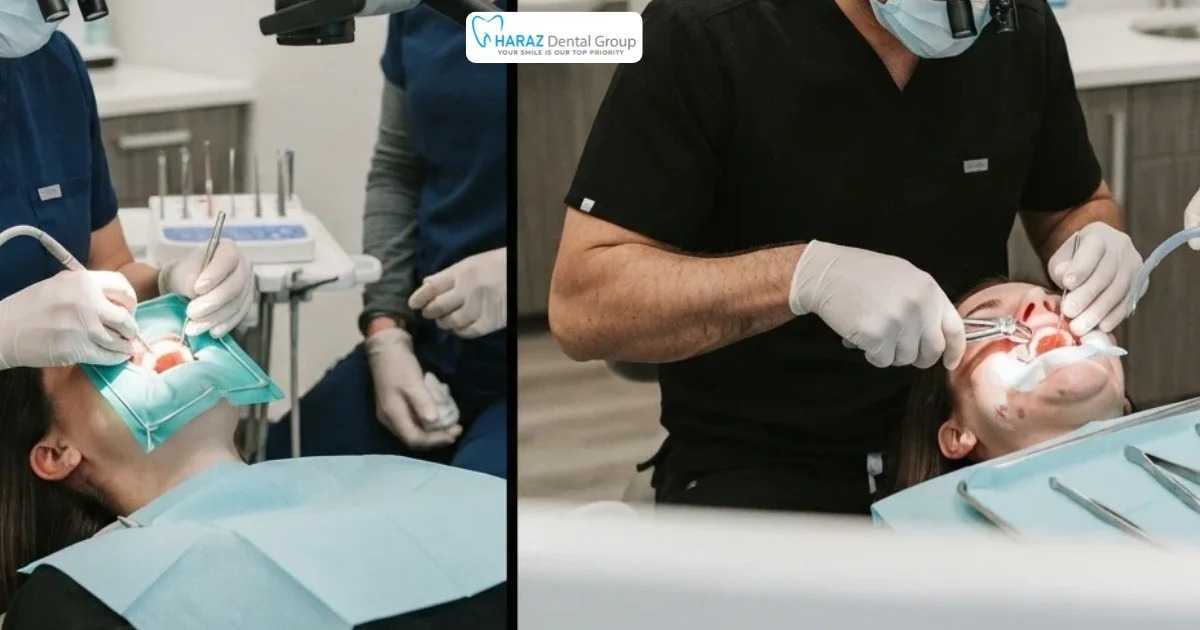
The biggest benefit of a root canal is that it saves your natural tooth. Keeping the tooth protects your jawbone, keeps neighboring teeth from drifting, preserves your natural bite and smile, and usually avoids the added cost and treatment time of an implant, bridge or denture. Extraction is sometimes the right call, but when a tooth can be saved, root canal therapy is generally the better choice.
If a dentist has told you that your tooth is badly infected or damaged, “just pull it” can sound like the simple answer. It’s quicker, it ends the pain, and it feels final. But a missing tooth leaves a gap that affects far more than your smile, and you may end up paying for that decision for years.
At Haraz Dental Group, we see patients in Fresno, Madera and Tulare who are scared of root canals and half-convinced extraction is the easier road. Below we explain what each option involves, why saving the tooth usually comes out ahead, and the cases where removing it is the smarter move.
What Is a Root Canal, and What Is an Extraction?
Root canal therapy (also called endodontic treatment) removes the infected or inflamed pulp from inside your tooth. The pulp is the soft tissue that holds the nerve and blood vessels. After the pulp is removed, your dentist cleans and disinfects the inner canals, fills and seals them, and usually finishes with adental crown to protect the tooth. Your natural root stays in place.
A tooth extraction removes the whole tooth, root included, from the socket. The infection and pain go away, but so does the tooth. If you want to chew and smile normally again, you’ll probably need a replacement.
Both treatments are done under local anesthesia and relieve the pain of an infected tooth. The real difference is what’s left in your mouth afterward.
7 Benefits of a Root Canal Over Tooth Extraction
1. You keep your natural tooth
Nothing looks, feels or works quite like a natural tooth. The AAE puts it plainly: when you choose between the two, a root canal usually costs less and lets you keep the tooth. Over 95% of Americans surveyed by the AAE said saving natural teeth is important, mostly because it’s healthier and looks better. Dentists agree, and saving the tooth is generally the first goal wherever it’s realistic.
A tooth that has had a root canal no longer has a living nerve, but it stays anchored in your jaw by the surrounding bone and ligaments. With a good crown, it works like any other tooth.
2. You protect your jawbone
Your tooth roots do more than hold teeth in place. Every time you chew, they send small forces into the jawbone that tell the body to keep that bone strong. Once a tooth is removed, that signal stops, and the bone in that spot slowly shrinks. This is called bone resorption.
Over time, bone loss can change the shape of your jaw and make futuredental implants harder to place. In some cases it calls for bone grafting first. A root canal keeps the root in the jaw, so the bone keeps getting the stimulation it needs.
3. Neighboring teeth stay where they belong
Teeth are a team. When one is missing, the teeth beside it and the tooth above or below can tilt, drift or move into the gap. That can throw off your bite, create spots where food gets trapped, and makegum disease and cavities more likely.
Saving the tooth with a root canal keeps the whole arch stable.
4. Your bite and chewing strength stay natural
A natural tooth is shaped for your bite. Replacement teeth do a good job, but a root canal-treated tooth with a crown keeps your original chewing pattern and your feel for what you’re biting. That’s especially important for molars, which do most of the heavy chewing.
5. It often costs less over the long run
Extraction usually costs less on the day. But the gap often needs filling, and that’s where costs add up. An implant, a bridge or a partial denture each brings extra appointments and expense, and some need maintenance or replacing later.
A root canal plus a crown generally costs less than extraction plus an implant. The AAE says the same: more often than not, a root canal is less expensive than the alternative and lets you keep your tooth. Exact costs depend on the tooth and your insurance, so ask our team for an estimate. We’ll walk you through your coverage and payment options.
6. It’s very predictable and usually long-lasting
Root canal therapy has strong long-term results. AAE-published research cites survival rates of about 95 percent at four years and at four to six years after initial root canal treatment. And in AAE-reported research comparing root canals with implants, root canal treatment rarely needed follow-up work, while implants had more complications and needed more follow-up care.
Even cracked teeth can often be saved. One large study of cracked teeth treated with root canals found an overall survival rate of 89.7%.
The long-term result still depends on how well the tooth is restored and how well you look after it.
7. Recovery is usually easier
After a root canal, most people feel mild soreness for a few days that over-the-counter pain relief can handle. An extraction leaves an open socket. Your gums typically need a week or two to heal on the surface, and the bone underneath takes months to fill in. You’ll also need to protect the clot, so no straws, smoking or rough rinsing at first.
Because an extraction often leads to further treatment, it can mean more total time in the dental chair.
“But Isn’t a Root Canal Painful?”
This is the myth that sends many people straight to extraction. The pain people associate with root canals comes from the infection, not the treatment. Local anesthesia numbs the area, and most patients say the procedure feels a lot like getting a filling.
If dental anxiety is the real barrier,sedation dentistry can help you stay calm throughout. Your comfort comes first, and we’d rather talk through your worries than have you pull a tooth you could keep.
Root Canal vs Tooth Extraction: Side-by-Side
Root Canal | Tooth Extraction | |
Natural tooth | Kept and restored | Permanently removed |
Jawbone | Stays stimulated and preserved | Gradual bone loss at the site |
Neighboring teeth | Stay in position | Can shift into the gap |
Replacement needed? | No (crown is usually advised) | Often, such as an implant, bridge or denture |
Recovery | Mild soreness, a few days | Gum healing in 1–2 weeks, bone over months |
Long-term cost | Often lower overall | Lower upfront, often higher after replacement |
When Extraction Is the Better Option
A root canal isn’t always the answer, and we’ll tell you honestly when it isn’t. Extraction may be the better choice if:
The tooth is fractured below the gumline or has a vertical root fracture.
There isn’t enough healthy tooth structure left to support a crown.
Advanced gum disease has destroyed too much of the supporting bone.
A previous root canal has failed and can’t be retreated.
The tooth is a severely impacted or problem wisdom tooth.
If extraction is the right treatment, we can plan the replacement from the start. That might mean dental implants, or full arch restoration if several teeth are involved. Ourtooth extraction page explains that process.
Signs You May Need a Root Canal
See a dentist promptly if you notice:
A constant or throbbing toothache, especially one that keeps you up at night
Sensitivity to hot or cold that lingers after the drink or food is gone
Pain when you bite down or press on the tooth
Swelling or tenderness in the gums, or a pimple-like bump on the gum
A tooth that has darkened in color
A bad taste in your mouth, or swelling in your face or jaw
Facial swelling, fever or trouble swallowing can signal a spreading infection. Get same-day emergency care. Ouremergency dentists in Fresnocan often see you the same day. Early treatment gives you more options and a better chance of saving the tooth.
Frequently Asked Questions
Is a root canal better than pulling a tooth?
In most cases, yes, as long as the tooth can be restored. A root canal keeps your natural tooth, protects your jawbone and avoids the need for a replacement. Extraction is better only when the tooth can’t be saved, for example with a deep vertical fracture or severe bone loss.
Does a root canal hurt more than an extraction?
No. Both are done with local anesthesia. Most people find a root canal comparable to getting a filling, and the pain beforehand comes from the infected tooth, not the procedure.
How long does a tooth last after a root canal?
With a proper crown and good daily care, a root canal-treated tooth can last many years and often a lifetime. Brushing, flossing and regular checkups make a big difference.
What happens if I don’t replace a tooth after extraction?
Neighboring teeth can drift, your bite can change, chewing can get harder, and the jawbone in that area can slowly shrink. That’s why dentists usually recommend replacing an extracted tooth.
Can an infected tooth be saved?
Often, yes. If enough healthy tooth remains, a root canal removes the infection and seals the tooth. If it’s too far gone, your dentist will explain your options.
Will my insurance cover a root canal?
Many dental plans cover part of root canal therapy and extraction. Our team can check your benefits and explain your estimate before treatment starts.
The Bottom Line
If your tooth can be saved, a root canal is usually the smarter long-term choice. You keep your natural tooth, protect your jawbone, keep your bite steady, and often avoid the added cost of an implant or bridge. And if extraction really is the best option, you’ll go in knowing why and with a plan for what comes next.
Not sure which option is right for your tooth? Haraz Dental Group offersroot canal therapyat our Fresno, Madera and Tulare offices, with same-day emergency care and flexible payment options. Call (559) 554-9791 (Fresno), (559) 673-3581 (Madera) or (559) 688-1940 (Tulare), or book your appointment online.